theonlyD800inthehameau
Photography by theonlydeadheadinthehameau
Contrasting colours
Posted on March 16, 2016
Well, I learned something today. Did you know that colours that are opposite each other on the colour wheel, when mixed, produce black? There’s a fact to be added to the store of useless information.
However, on this occasion we’re not looking to mix opposing colours but to juxtapose them. Essentially there are three ‘pairs’ of opposing colours, so here are a couple of images of each set:
Red and Green
Two roses, the first from Monet’s Garden, the second from outside our own back door (this one hs a wonderful, heady scent. Madame’s grandmother had some of these in her own garden and it brings back happy memories).


Orange and Blue
Two photographs taken on the island of Burano, in the Venetian lagoon


Purple and Yellow
I had to get a bit creative here, as I don’t seem to have many images featuring this pairing in my library.


The first is an imposing building in Bruges, where the yellow detail on the columns contrasts with the indigo shade of the reflected sky in the windows. The second is a detail of a window display in a quilting supplies shop in Sarlat. The purple and yellow are among the threads at the top, in case you’re wondering.
Analogous Colours
Posted on March 1, 2016
The latest instalment in this thread calls for examples of analogous colours – in other words, ones that are adjacent on the colour wheel:

The most common mnemonic to help with remembering the ‘proper’ sequence of colours in the spectrum is ‘ROYGBIV’: red, orange, yellow, green, blue, indigo and violet. Here are some images that put together good neighbours.
OYG
Two examples here: a flower from Monet’s Garden in Giverny and a selection of flowering courgettes from the Rialto Market in Venice


GB
A bright blue dragonfly on a green leaf (from my garden pond)

BIV
My grandson sitting at the top of a slide at his pirate-themed second birthday party

IVR
Finally, this is an electronic display in The Mall of The Emirates in Dubai. The colours actually cycle through the whole spectrum

Cee’s Compose Yourself Photo Challenge: Complimentary Colours
Cropping
Posted on February 1, 2016
There aren’t many photographs I take that don’t go unedited – especially those that make their way onto this blog – and almost all of those begin with cropping (and straightening where necessary, of course). I agree with Cee very strongly on the importance of cropping: as she writes, it can make a mediocre photo good and a good one great.
(NB: The images in this post have only been cropped, with no other post-processing. In this way, it’s possible to isolate the impact of cropping alone from the overall editing process.)
Eliminating Distractions
This first image was taken from the observation lift that provides panoramic views over Sarlat. The roofs are interesting and colourful but (a) you don’t need to see all of them to get the picture, so to speak and (b) although it’s a medieval town that doesn’t mean that they don’t have access to modern technology. Like satellite dishes; lots of satellite dishes. The cropped version removes all but one (partially obscured) dish – which could be eliminated altogether with further editing, as well as cars, streetlights etc.


As another example of removing distractions, here’s a picture of a nice foxglove, which doesn’t really need the roofline behind it.


Cropping for Composition
Cropping can also be helpful in improving the composition of an image, as in this photograph of the distinctive seedpods of the ‘monnaie du pape’ (‘Honesty’) plant, which in the cropped version are placed on a ‘Rule-of-thirds’ intersection.


Finding a new image
Sometimes, close cropping can reveal a ‘new’ image nested inside the original that isn’t immediately obvious – as in this view from Oradour-sur-Glane.


Taking more than one picture
And finally, as per Cee’s advice always to take more than one photograph, here are two shots of a set of decanters and glasses from a museum in Sarlat. The second is not a crop of the first, but just a close-up: same subject, completely different image.


Centred
Posted on December 16, 2015
This week we focus on images that, with a healthy disregard for the rule of thirds, are intended to be placed in the middle of the frame: to be literally the centre of attention.
This image was taken looking down a corridor in the cellars of a wine-producing chateau in the Bordeaux region:

Flowers are a very obvious ‘centre-friendly’ subject – particularly when photographing buds, before the petals start to compete for space in the frame:


Also, of course, anything circular has an obvious central focus, be it wheels or even fireworks:


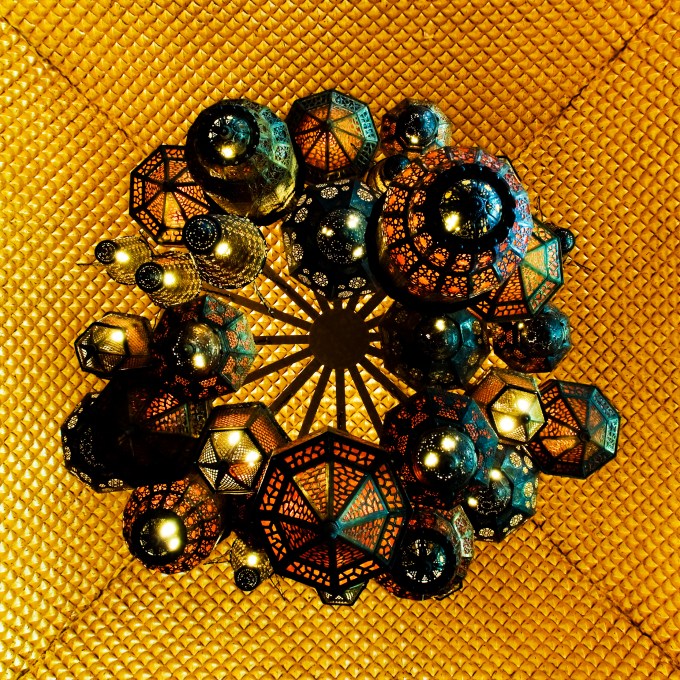
And finally this is just one of my most favourite images: it was taken looking directly upwards to the ceiling of the reception area of the Sir Bani Yas Hotel in Abu Dhabi. Those lanterns are between six and eight feet high when you see them sideways on from the second floor.
One Photo Focus: December 2015
Posted on December 4, 2015
My second contribution to the After-Before Friday Forum coincides with the monthly One Photo Focus. This requires all participants to edit the same image, which in this case has been provided by Julie Powell at Julie Powell Photography. Here is the original:

…and here is my edited version:

Herewith my rationale for the changes I made:
- Cropped for balance, to put the flower itself at the centre of the picture
- Darkened the background, to remove as much as possible that could distract from the subject. I also finished this off with a Lightroom pre-set Light Vignette
- Adjusted the tone curve to soften the white in the petals (Clarity -24) and also bring out detail in the water drops on the right-hand side (Vibrance +30)
- Most radically, I changed the colour at the centre of the image as the original yellow seemed to me to be rather ‘washed-out’. I simply took down the Yellow Hue adjuster to -100, which produced this – I think – more attractive salmon-pink tone
- Cloned over the green ‘blob’ just to the left of centre in the flower, which was another distraction
Rule of Thirds (1)
Posted on December 3, 2015
All these images place the subject in either the left or right one-third of the image and, I think, are more effective than they would be if they were simply centred. Roll over each image for further explanation.


Weekly Photo Challenge: Transition
Posted on November 28, 2015
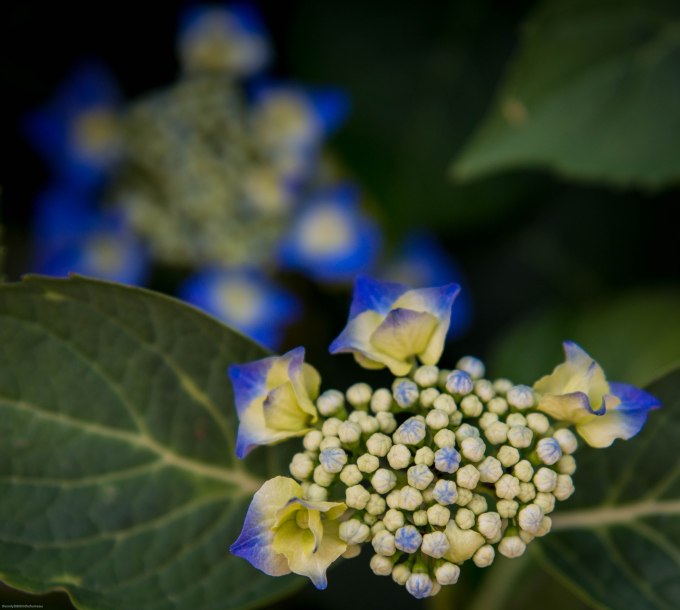
There are two types of transition in this image, taken outside the church at Montrol-Sénard: from buds to fully-opened flowers and from the soft focus at the rear to the much sharper front closer to the viewer.
Weekly Photo Challenge: Change
Posted on September 26, 2015
The life-cycle – a constant process of change – of a rose, in a single image:

Crocuses
Posted on August 20, 2015
Presenting a monochrome image of a flower that’s at least as interesting as the original is quite challenging, since one of the main selling-points of flower photography is the colour. Hopefully, though, this picture of a couple of crocuses does the job – helped by the lead-in lines provided by the leaves.

Red Hot Poker
Posted on June 11, 2015
With an open topic from Cee for this week, I was naturally drawn to one of my favourite subjects, particularly as it’s not listed for the coming weeks.
This image is a detail from a photograph I took of a ‘Red Hot Poker’ (Kniphofia if you want to be properly botanical about it) that flowered last week.
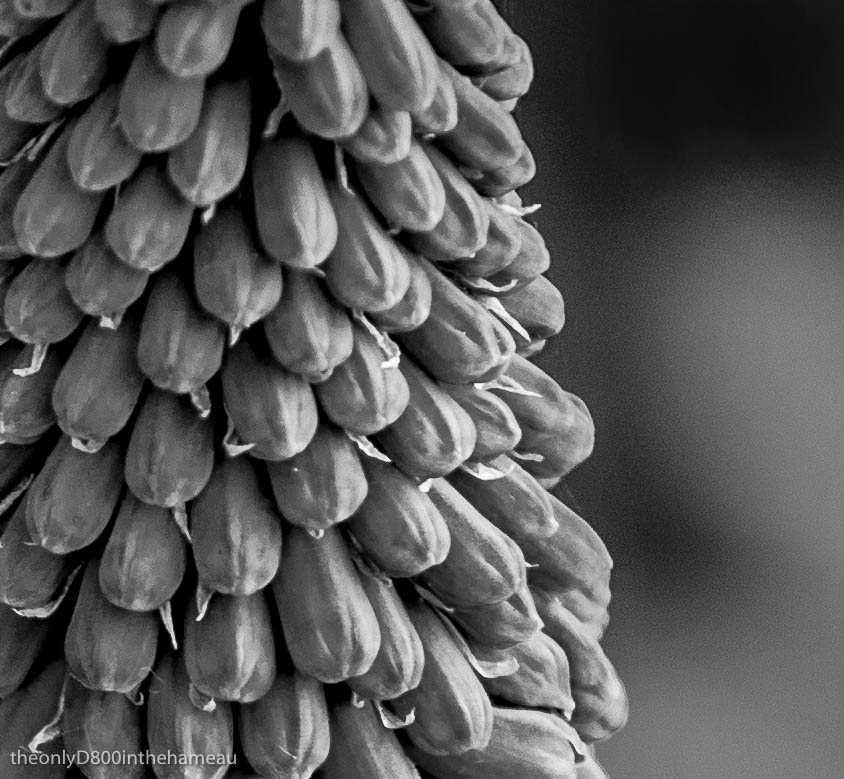
Not that I’m a gardener by any means (that is Madame’s domain; I just cut the grass and do some of the heavy lifting) but macro photography is one of my particular interests and flowers are an inexhaustible source of subject matter
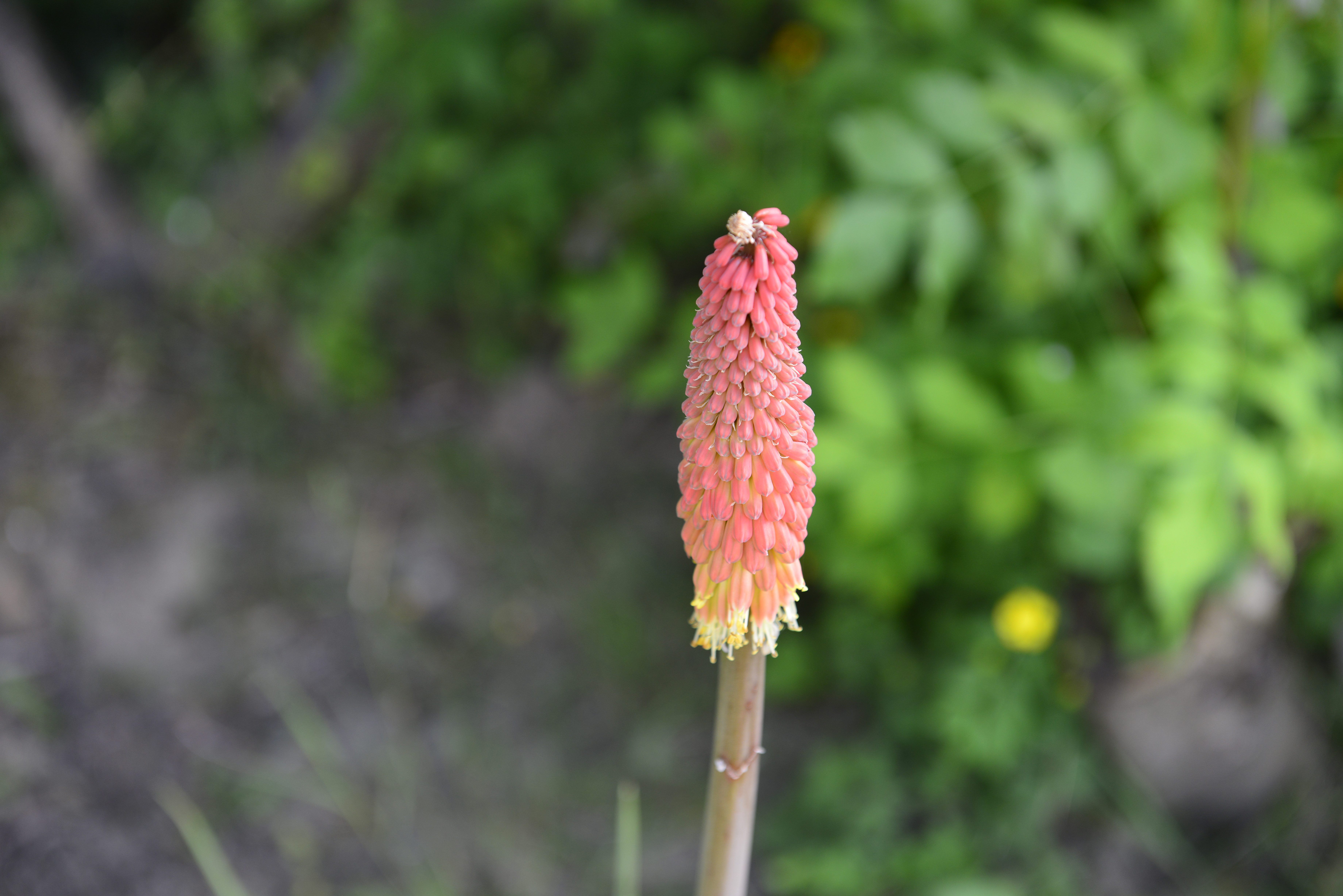
Just so you can see where it’s come from, here is the original image. Fun with Lightroom did the rest.

Top Posts & Pages


 theonlyD800inthehameau