theonlyD800inthehameau
Photography by theonlydeadheadinthehameau
A Nod To Escher
Posted on October 14, 2016
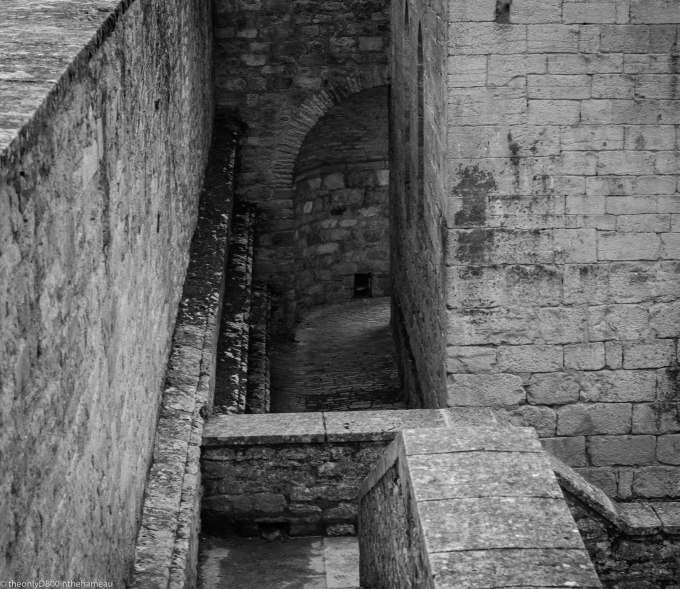
This photograph is of part of a ruined monastery (I think) in Sarlat, a medieval town in the Dordogne.
This week, Cee is looking for images of rocks. You could perhaps argue that these are stones rather than rocks, but what exactly is the difference between a stone and a rock?
Well, according to Wikipedia (so it must be true), stone is rock that’s had a bit of work done on it. Still made of rock though, I’d argue.
Judiciously cropped, as here, it reminded me of something that M C Escher might have produced.
Thursday Doors: Sarlat (encore)
Posted on July 28, 2016
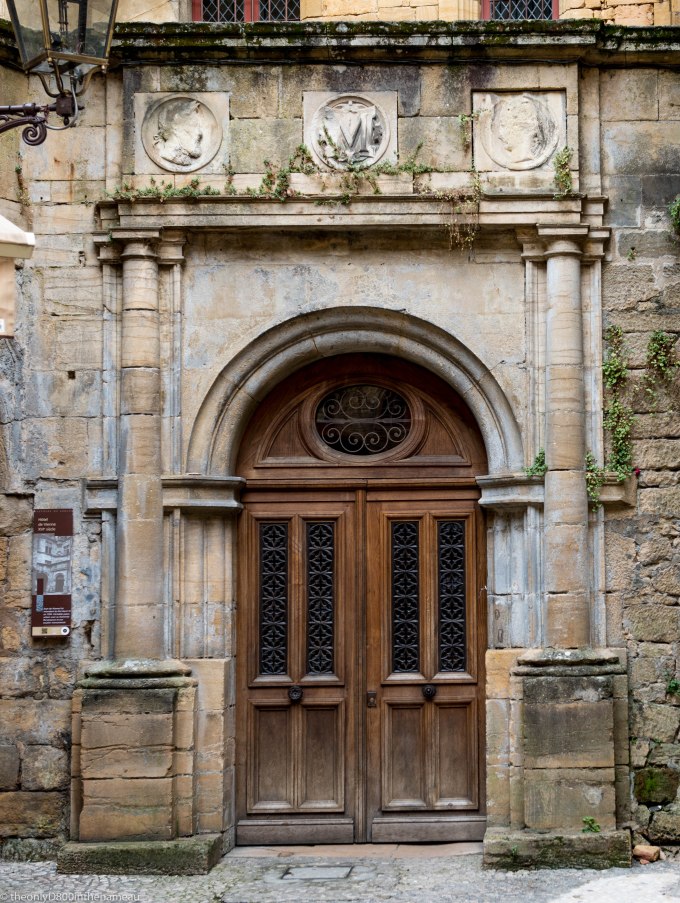
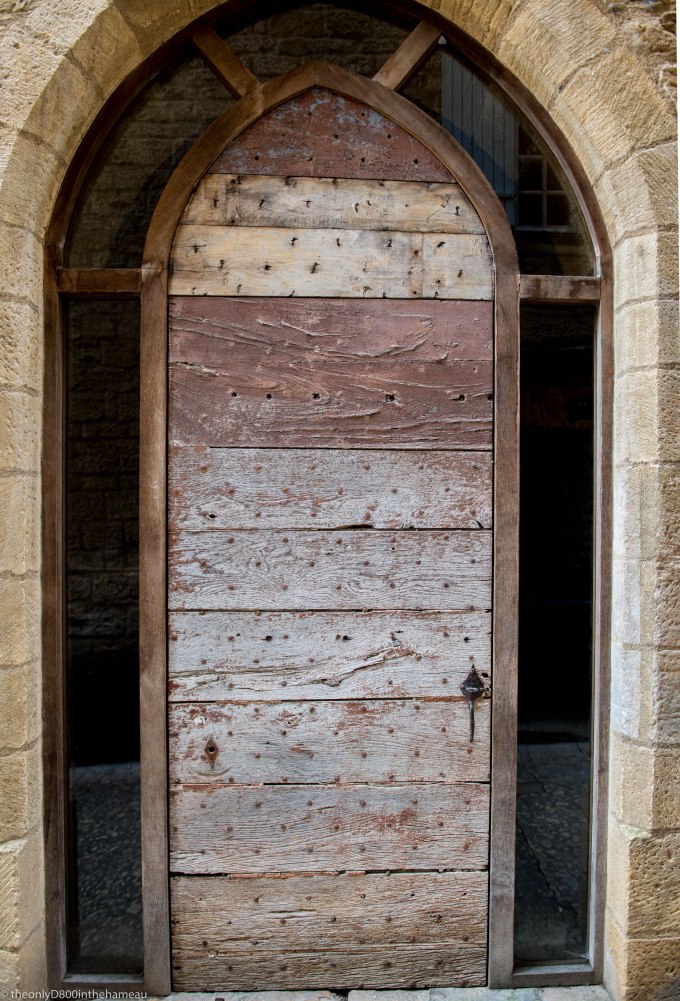
Previously in Thursday Doors we’ve seen what are unquestionably the largest doors in Sarlat and what is probably the smallest. So, to complete the range, here are some in between.
This is a Gift/Craft Shop and it’s completely bonkers:

While these are just plain old:


Thursday Doors 28 July 2016
Antique
Posted on July 22, 2016
Finding something over 50 years old for this week’s edition of Cee’s Black & White Photo Challenge isn’t the hard part. Just looking in the mirror solves that problem.
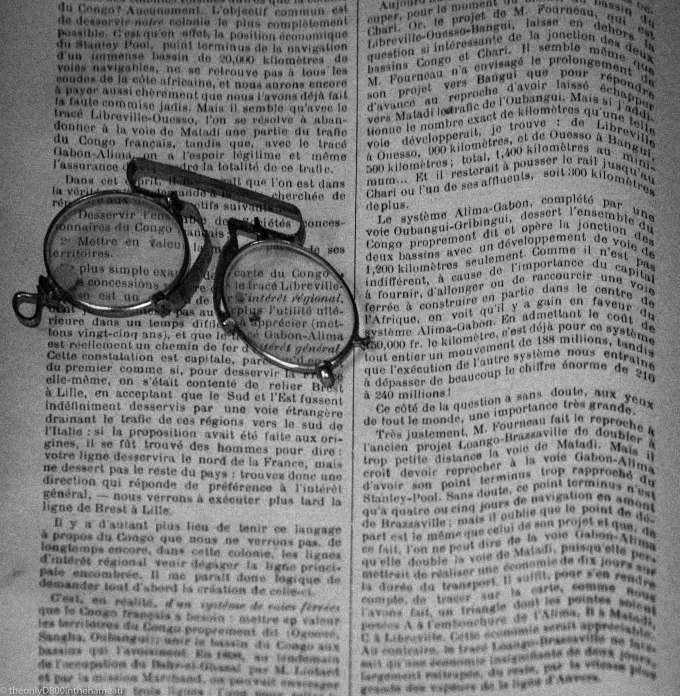
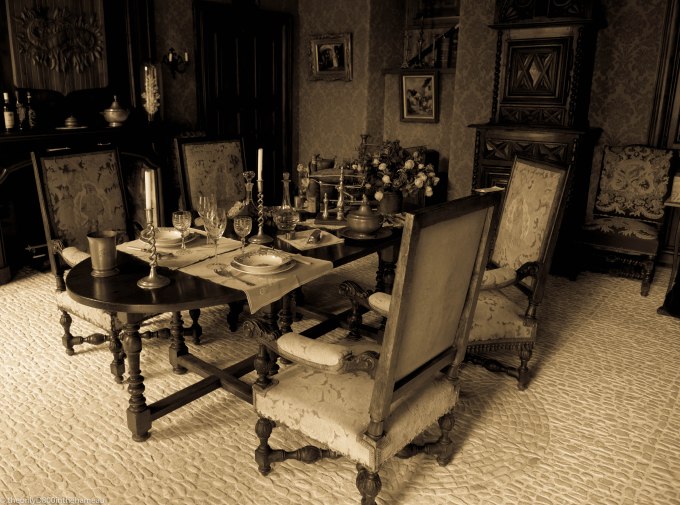
However, to spare all of us the ordeal of a self-portrait, here are three photographs taken in a chateau in Sarlat, which is set up as it might have looked in the sevententh century (way more than fifty years ago).
This old book (Proceedings of the Committee on French Africa – riveting stuff) is artfully placed on a desk, but I liked the cropped version showing the book itself and the (also artfully placed) reading glasses:
Sepia seemed the most appropriate colour cast for this formal dining-room:
But my favourite image is this one. A quasi-impressionist view through some very old window-panes, the antiquity of which is attested by the fact that they’re full of bubbles, showing that they were made in the days before glaziers had mastered the techniques of producing absolutely clear glass in mass-market quantities:

Contrasting colours
Posted on March 16, 2016
Well, I learned something today. Did you know that colours that are opposite each other on the colour wheel, when mixed, produce black? There’s a fact to be added to the store of useless information.
However, on this occasion we’re not looking to mix opposing colours but to juxtapose them. Essentially there are three ‘pairs’ of opposing colours, so here are a couple of images of each set:
Red and Green
Two roses, the first from Monet’s Garden, the second from outside our own back door (this one hs a wonderful, heady scent. Madame’s grandmother had some of these in her own garden and it brings back happy memories).


Orange and Blue
Two photographs taken on the island of Burano, in the Venetian lagoon


Purple and Yellow
I had to get a bit creative here, as I don’t seem to have many images featuring this pairing in my library.


The first is an imposing building in Bruges, where the yellow detail on the columns contrasts with the indigo shade of the reflected sky in the windows. The second is a detail of a window display in a quilting supplies shop in Sarlat. The purple and yellow are among the threads at the top, in case you’re wondering.
Cropping
Posted on February 1, 2016
There aren’t many photographs I take that don’t go unedited – especially those that make their way onto this blog – and almost all of those begin with cropping (and straightening where necessary, of course). I agree with Cee very strongly on the importance of cropping: as she writes, it can make a mediocre photo good and a good one great.
(NB: The images in this post have only been cropped, with no other post-processing. In this way, it’s possible to isolate the impact of cropping alone from the overall editing process.)
Eliminating Distractions
This first image was taken from the observation lift that provides panoramic views over Sarlat. The roofs are interesting and colourful but (a) you don’t need to see all of them to get the picture, so to speak and (b) although it’s a medieval town that doesn’t mean that they don’t have access to modern technology. Like satellite dishes; lots of satellite dishes. The cropped version removes all but one (partially obscured) dish – which could be eliminated altogether with further editing, as well as cars, streetlights etc.


As another example of removing distractions, here’s a picture of a nice foxglove, which doesn’t really need the roofline behind it.


Cropping for Composition
Cropping can also be helpful in improving the composition of an image, as in this photograph of the distinctive seedpods of the ‘monnaie du pape’ (‘Honesty’) plant, which in the cropped version are placed on a ‘Rule-of-thirds’ intersection.


Finding a new image
Sometimes, close cropping can reveal a ‘new’ image nested inside the original that isn’t immediately obvious – as in this view from Oradour-sur-Glane.


Taking more than one picture
And finally, as per Cee’s advice always to take more than one photograph, here are two shots of a set of decanters and glasses from a museum in Sarlat. The second is not a crop of the first, but just a close-up: same subject, completely different image.


Weekly Photo Challenge: Vibrant
Posted on January 30, 2016
This display of individually hand-painted plates outside a shop in Sarlat certainly meets the brief for this week’s challenge of ‘Vibrant’.

Thursday Doors: Sarlat (again)
Posted on January 14, 2016
Just over a month ago, I posted a picture of what are inarguably the biggest doors in Sarlat. By contrast, this is quite likely the smallest.

Symmetry
Posted on January 13, 2016
Something in the human brain is attracted to symmetry; we find it – almost always – aesthetically pleasing. And, as Cee points out this week, it can appear in many different guises.
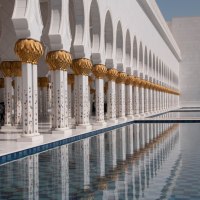
To begin with, here are two images from the Sheikh Zayed Grand Mosque in Abu Dhabi. The first is yet another (no apologies though) chandelier, pictured from below, which is an example of circular symmetry, while the second is the top of a dome, which is obviously an example of left/right symmetry.


Although symmetry is an important element of Islamic art, it also features extensively in secular situations in Arab countries. Here is part of the seawall on the Abu Dhabi Corniche and – more prosaically – the underground carpark of the Dubai Mall.


It’s also possible to see symmetry in multiple subjects: like these two conjoined kites from the Blond airshow and a set of measuring jugs from a museum in Sarlat.


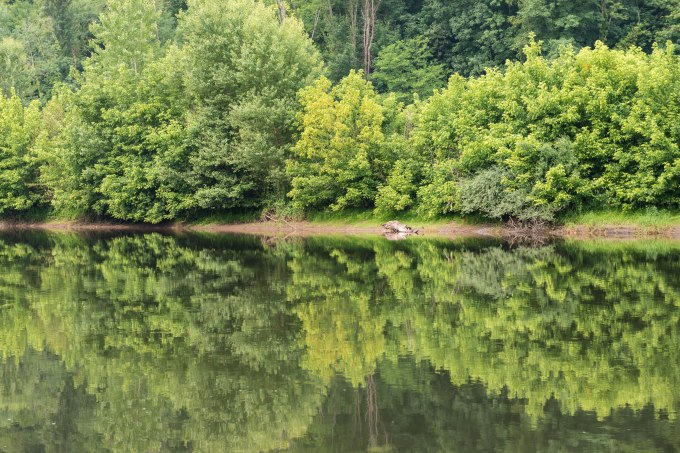
And finally, the symmetry of reflections on the Dordogne River
Thursday Doors: Sarlat
Posted on December 3, 2015
Doors? You want doors? Well, how’s this for a door?
I freely admit that it is quite fortuitous that the shape of this huge doorway is reflected in the arch visible inside – not to mention the sign outside.
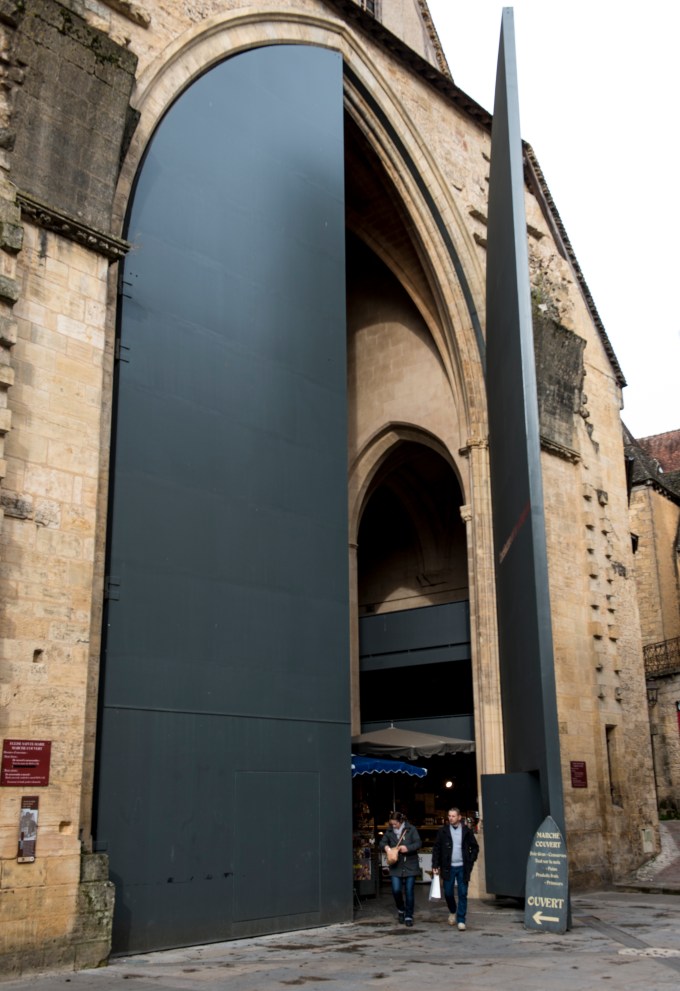
This massive set of doors is in a medieval church that’s been converted to an organic food market at Sarlat, in the Dordogne.
Leading Lines
Posted on November 2, 2015
Leading lines could well be the first basic tool of composition that I picked up on and have stuck with ever since – to the extent that in many cases the leading lines are the image. Anyway, I seem to have plenty of them, of which these are a few – and, hopefully, varied – examples.


And finally, in a shameless attempt to earn a gold star, two images of curved leading lines


Top Posts & Pages


 theonlyD800inthehameau